


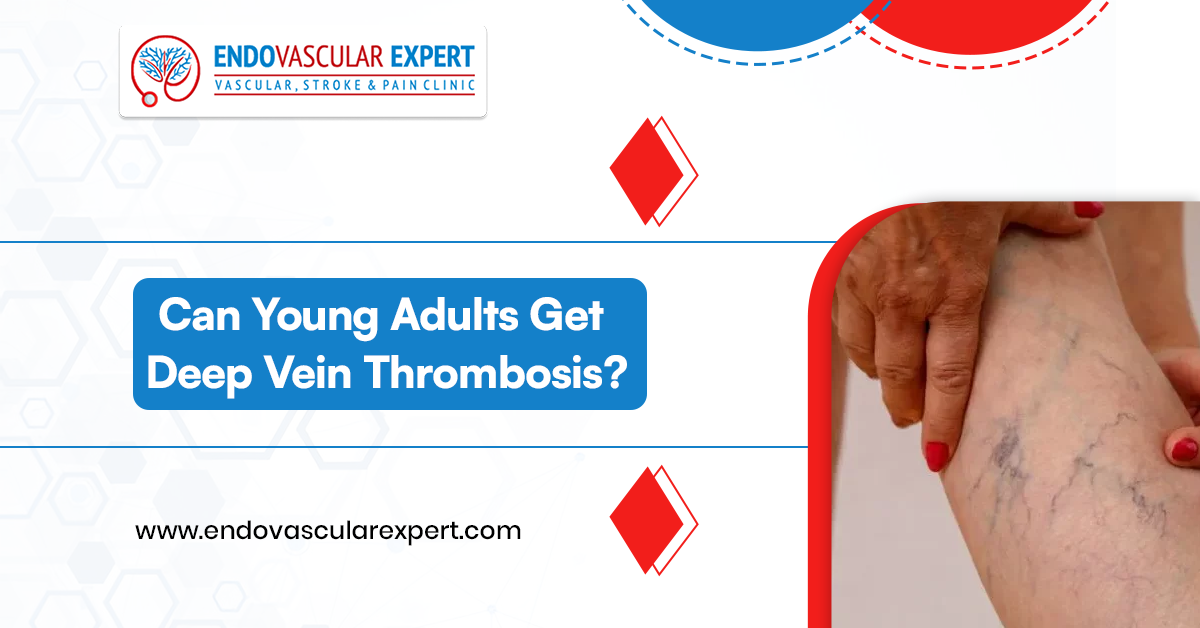
“Blood clots? That’s something older people get.”
If you’ve ever thought that, you’re not alone. Most people think of deep vein thrombosis (DVT) as an old person’s disease. But it doesn’t have to be. While the risk is higher after 60, Young Adults Get Deep Vein Thrombosis too. But it’s not every day that it occurs, and when it does happen, it can cause serious problems if you ignore the warning signs.
Can Young Adults Get Deep Vein Thrombosis?
Yes, they can.
Age is just one risk factor. A blood clot doesn’t check your birthday before it forms. Young Adults Get Deep Vein Thrombosis because of a mix of lifestyle habits, medical conditions, injuries, and sometimes genetics.
Think about today’s routine. Many people spend eight to ten hours sitting in front of a laptop, binge-watch an entire series without moving, or take long flights with very little leg movement. These habits can slow blood flow in the legs, making it easier for a clot to form in some people.
That doesn’t mean every young adult is at high risk. It simply means DVT is possible, even in your 20s or 30s.
So, What Exactly Is DVT?
Deep vein thrombosis, or we can say DVT in a simple language explain that in this a blood clot forms in a deep vein and it is usually in the calf or thigh. Because of this clot it prevents the blood form flowing properly into the legs is prevented, and this all leads to swelling, which further makes it painful, tender, or heavy.
The real problem starts when a piece of that clot breaks off and gets carried to the lungs. This can lead to a pulmonary embolism and is a medical emergency. This is why doctors are never told to dismiss symptoms that don’t feel right.
Why Can It Happen at a Young Age?
There isn’t always one clear reason. In many cases, several small risk factors come together.
Some common ones include:
- Sitting for long hours at work, college, or while travelling.
- Recovering from surgery or a leg injury.
- Smoking.
- Being overweight.
- Pregnancy and the weeks after delivery.
- Birth control pills or hormone therapy.
- A family history of blood clots.
- Certain inherited blood clotting disorders.
Having one or more of these doesn’t mean you’ll definitely develop DVT. It simply means it’s worth paying a little more attention to your health.
Don’t Ignore These Signs
DVT does not always begin with severe pain. The symptoms are often mild initially and easily overlooked. You may also like:
- Swelling of a leg
- Cramping or pain in the calf
- Skin warmth in the affected area
- Change in skin colour or redness
- Pain when standing or walking
A lot of people think it’s a pulled muscle, being tired from a long day, or sore muscles from working out. But do not ignore it if the pain or swelling does not improve or gets worse. And for this, you need a Deep Vein Thrombosis Doctor in Jaipur before it leads to serious complications.
How Do Doctors Find Out If Young Adults Have Deep Vein Thrombosis?
Step one is to get a handle on your symptoms and medical record. Your doctor may ask whether you have travelled recently, had surgery, been less active than usual, or have a family history of blood clots.
A Doppler ultrasound can be done to confirm the diagnosis. This test shows the movement of blood through the veins. Blood tests or other scans may also be advised based on the circumstances.
Can the person lower the risk of deep vein thrombosis?
Certainly. The difference can be made by a few everyday habits.
- Move around every hour.
- Take breaks to stretch your legs on long flights or road trips.
- Drink enough water during the day.
- Get some exercise.
- Keep a healthy weight.
- Try not to smoke, if possible.
- Follow your doctor’s advice after surgery or during recovery from an injury.
Here are some small changes to your daily routine that may help promote healthy blood flow and lower your risk.
Final Thoughts
Getting older does increase the risk of DVT, but that doesn’t mean that younger folks are totally in the clear, as Young Adults Get Deep Vein Thrombosis too, especially when there are certain risk factors. The trick is to see the early warning signs and not ignore them. Only timely diagnosis and correct treatment can make all the difference.