


“The doctor told me my fibroid has grown but I don’t feel sick.” If that’s what you came here for, you’re not alone.
A lot of women discover that they have fibroids during a routine ultrasound or while they are being examined for another condition. What’s surprising? They don’t have pain or heavy periods or any obvious symptoms. So when the scan shows that the fibroid has grown in size, the first question that comes to mind is, “How can that be?”
The truth is, fibroids don’t always present obvious symptoms. They can grow silently for months, or even years, without interfering with your daily life. That’s exactly why Fibroids Keep Growing is so confusing for so many women. The absence of pain does not always mean that the fibroid is no longer growing.
First, understand: What Are Uterine Fibroids?
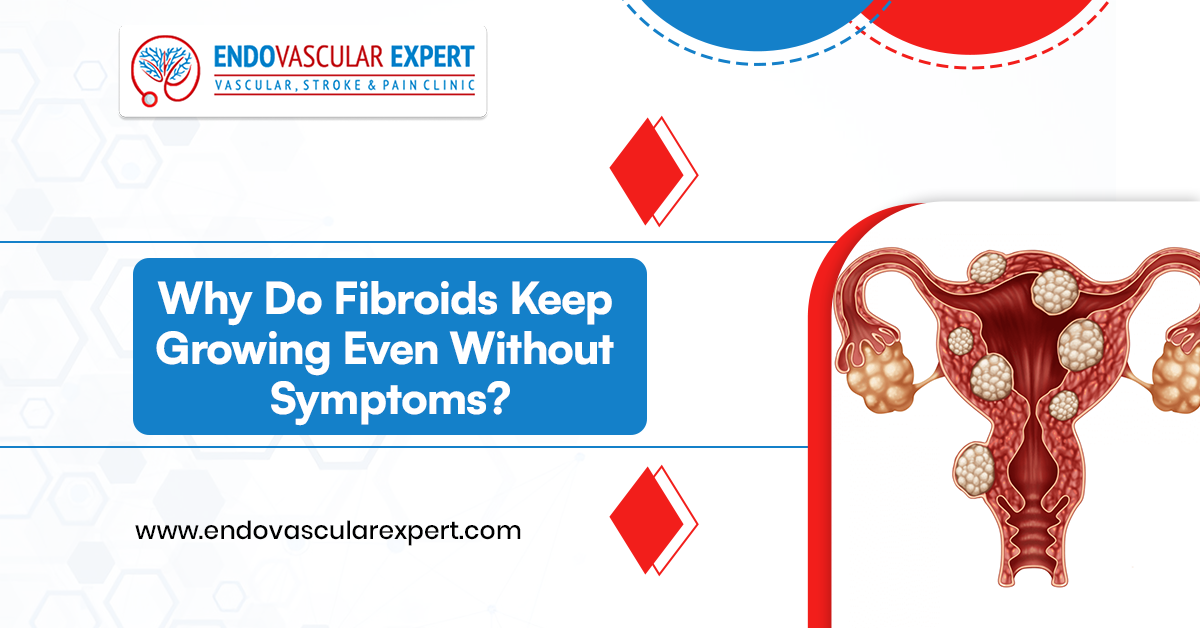
Uterine fibroids are non-cancerous growths that develop from the muscle of the uterus. They are one of the most common conditions seen in women during their reproductive years.
Fibroids don’t look the same in every woman.
- Some women have only one fibroid.
- Others may have several.
- Some remain small for years.
- Others slowly increase in size.
Many women discover they have fibroids only during a routine ultrasound because they don’t have any symptoms.
Why Do Fibroids Keep Growing?
The answer is not as frightening as it sounds. In most cases, fibroids grow due to natural changes in the body. Moreover, there isn’t one single reason. Usually, a few things work together.
Hormones Have a Big Role
Fibroids are sensitive to the hormones oestrogen and progesterone. These hormones are naturally produced during the reproductive years.
As long as these hormones are active, fibroids may continue to grow. This is one reason they often become larger before menopause and may shrink afterwards.
Your Family History Matters
You are at higher risk for fibroids if your mother or sister had them. Doctors also have found some fibroids have genetic changes that cause them to grow differently than other fibroids. That’s why one woman may have a small fibroid for years, while another will see it grow steadily.
They Usually Grow Slowly
Fibroids rarely become large overnight. Most grow little by little. Since the change is gradual, your body often adapts to it. That’s why Do Fibroids Keep Growing is such a common question after a routine scan.
Why Don’t Growing Fibroids Always Cause Symptoms?
Many women expect a growing fibroid to cause pain. In reality, symptoms depend more on where the fibroid is located than on its size.
For example, a fibroid growing on the outer wall of the uterus may not affect your periods at all. You should still watch for signs such as:
- Heavy or prolonged periods
- Pelvic pressure
- Frequent urination
- Constipation
- Pain during intercourse
- Difficulty planning a pregnancy
When Should You Visit a doctor?
If your fibroids are not causing problems now, don’t skip your follow-up visit with a Uterine Fibroids Surgeon in Jaipur becuse regular checkups and ultrasound scans can help your doctor monitor if the fibroid is stable or growing over time. If you see it, you should make an appointment:
- Periods that are heavier or longer than normal
- Pain or pressure in the lower belly
- Frequent urination or trouble having a bowel movement
- You have diagnosed fibroids and are trying to conceive
How Are Fibroids Treated?
Not all fibroids require removal. Your doctor may suggest, depending on your condition:
- Periodic monitoring
- Medications to control symptoms
- Minimally invasive surgeries
- Removal of the fibroid by myoectomy
- Hysterectomy in selected patients
The treatment plan is always tailored. What is right for one woman may not be right for another.
Can You Stop Fibroids From Growing?
The best way to prevent fibroids isn’t known, but it’s always wise to look after your health. It’s easy with some simple habits:
- Stay physically active
- Eat a healthy diet
- Maintain a healthy weight.
- Do not miss your regular gynaecological check-ups.
- Once you are diagnosed with fibroids, follow your doctor’s advice.
While these steps may not prevent the growth of fibroids, they will help you to catch changes early and promote better reproductive health.
Conclusion
Even if you feel perfectly healthy, it’s unnerving to discover a fibroid has grown. But growth is not always a sign of an emergency. Knowing Why Do Fibroids Keep Growing tells you why regular check-ups are important, even if you’ve got no symptoms. The sooner you identify the changes, the easier it is to choose the right treatment and avoid future complications. Listening to your body and staying in touch with your doctor can be key.