Overview - Pudendal Artery Angioplasty and Stenting in Jaipur
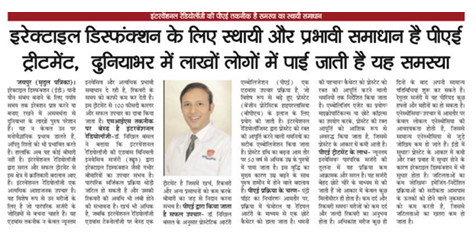
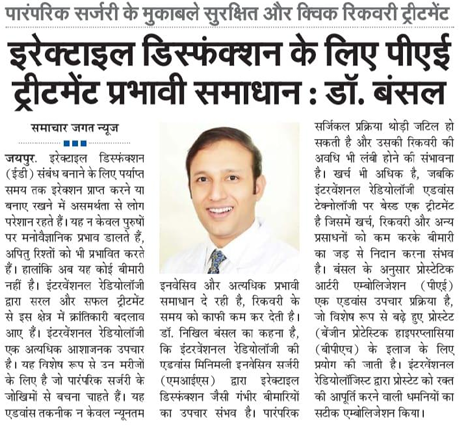
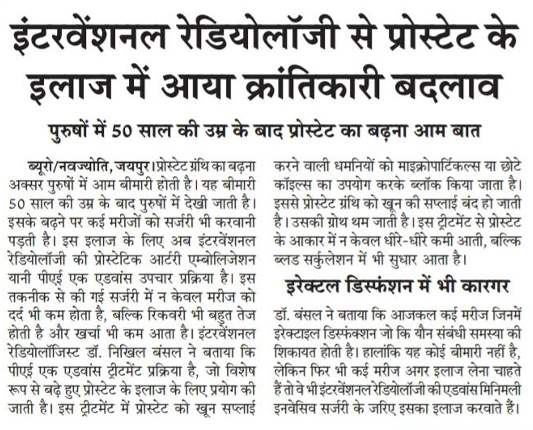
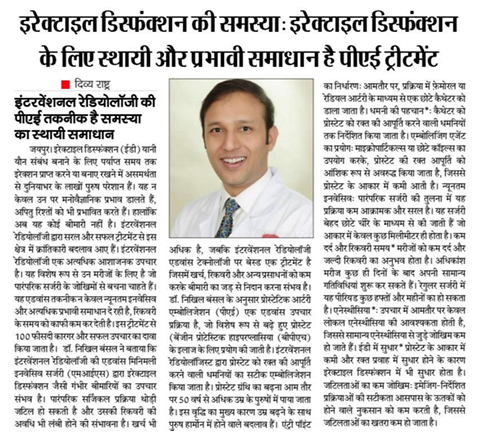
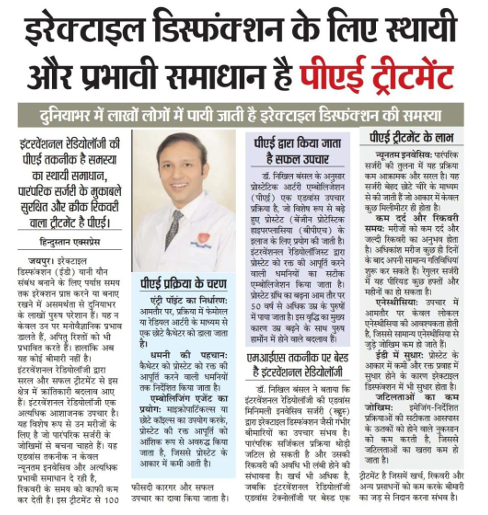
Erectile dysfunction can happen when the pelvic arteries become narrow and block blood flow to the penis. In some cases, atherosclerosis in the pudendal artery can make erectile dysfunction worse, especially when medication does not give good results. Dr. Nikhil Bansal checks patients with Doppler ultrasound and angiography to find out if an invasive pudendal artery angioplasty could be a suitable treatment for erectile dysfunction.
Most patients will try drugs such as sildenafil and tadalafil. However, while most patients benefit from these medications, published studies show that PDE-5 drugs are successful in just about half of the men taking them. Angioplasty will open the narrowed part of the artery, allowing normal flow of blood. Before recommending this procedure, Dr. Nikhil Bansal, an interventional radiologist, examines each patient using Doppler ultrasound and angiography.

15K+
Happy Patients

10K+
Done Varicose Veins Treatment

15+
Years Of Experience

Safe & Trusted
Varicose Veins Doctor
Why Choose Dr. Nikhil Bansal For Pudendal Artery Angioplasty and Stenting in Jaipur?
Dr. Nikhil Bansal is an artery angioplasty doctor in Jaipur who treats blocked arteries and veins as part of his daily endovascular practice. Patients choose Dr. Nikhil Bansal for the following reasons:

Expertise and Experience
Dr. Nikhil Bansal has 15+ years of experience in image-guided vascular procedures, including angioplasty and stenting.

Careful Patient Selection
Each patient undergoes a detailed evaluation to identify the cause of erectile dysfunction and determine treatment suitability.

Treatment Planned for Your Artery
Treatment options are selected according to the location, severity and nature of arterial narrowing identified during imaging.

Patient-Centered Care
Private consultations address sensitive concerns while considering underlying risk factors such as diabetes, hypertension and high cholesterol.

Accessibility and Trust
Located near JK Lon Hospital in Jaipur, the clinic provides access to diagnostic investigations that support patient evaluation and treatment planning.

15
years of
experience
Meet Our Expert
Dr. Nikhil Bansal
MD, PGDHHM, FVIR, FIPM
Consultant Endovascular & Interventional Radiology
Pudendal Artery Angioplasty Specialist in Jaipur
Dr. Nikhil Bansal holds an MD in Radiology and the FVIR and FIPM qualifications. He completed a Fellowship in Pain Management from the DPM Association, accredited with Aesculap Academy, Germany, and a PGDHHM in Healthcare Management from Symbiosis, Pune. He is a Consultant Interventional Radiologist at Mahatma Gandhi Hospital, Jaipur, and the treating specialist at Endovascular Expert Clinic. His work includes diagnostic and therapeutic image-guided procedures, and he has presented award-winning research papers at national and international conferences. Over 15+ years, he has treated more than 10,000 patients with conditions of the arteries, veins and other organs without major surgery.
What Is Pudendal Artery Angioplasty?
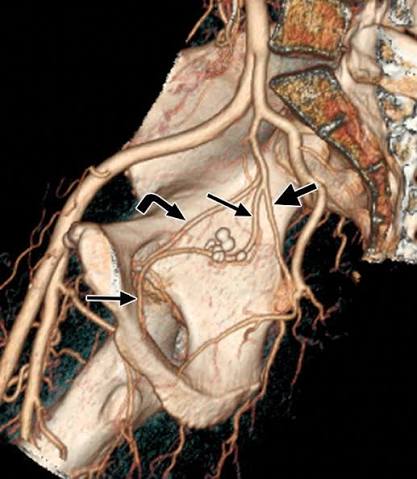
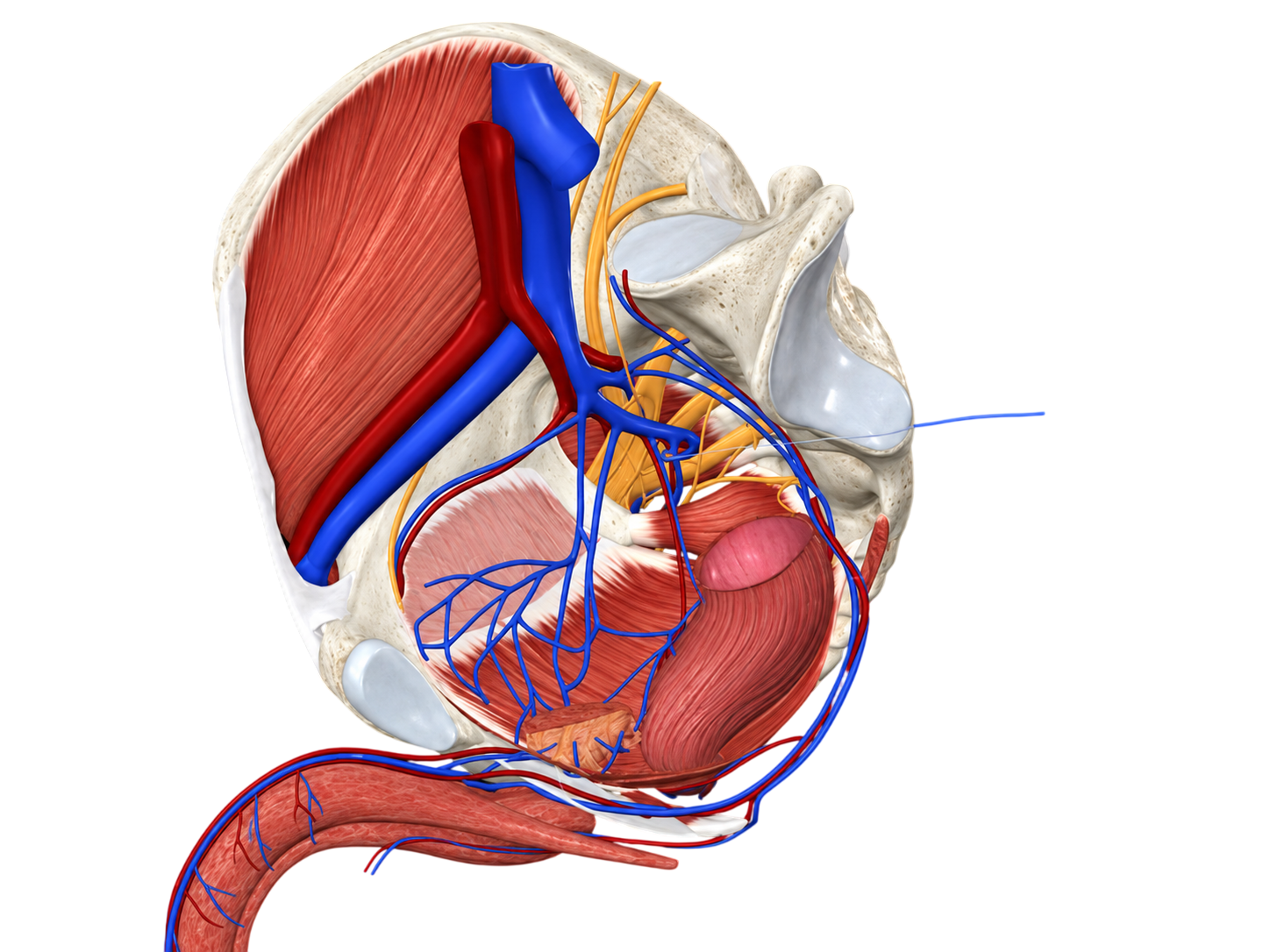
Pudendal artery angioplasty is a procedure in which a thin tube (catheter) is guided through the blood vessels to a narrowed pudendal artery, and a small balloon is inflated to widen it. The internal pudendal artery is a branch of the internal iliac artery in the pelvis, and it is one of the main sources of blood for the penis. Opening a blockage in this artery allows more blood to enter the penis during sexual arousal.
Doctors use the term internal pudendal artery angioplasty when the narrowing sits specifically in that vessel. Dr. Bansal offers internal pudendal artery angioplasty in Jaipur for such blockages after they are confirmed on imaging. At our clinic, pudendal artery angioplasty in Jaipur is planned only for men in whom the tests show that poor arterial inflow is a real cause of ED.
Symptoms
The possible symptoms of poor blood flow to the penis are:
- Difficulty getting a firm erection
- An erection that is not hard enough for intercourse
- An erection that fades quickly or cannot be maintained
- Little or no response to tablets such as sildenafil or tadalafil
- Symptoms that have worsened slowly over months or years
- Leg pain while walking, cold feet or other signs of artery disease elsewhere in the body
Causes and Risk Factors
The most common cause is atherosclerosis, a slow process in which fat, cholesterol and calcium collect inside the artery wall. Internal pudendal artery stenosis in Jaipur, as in other cities, is mostly caused by this process. The artery becomes narrow, and less blood reaches the penis. Injury to the pelvis and radiation treatment to the pelvic area can also damage these arteries. Several risk factors raise the chance of this blockage. Some can be controlled:
- Diabetes
- Smoking and tobacco use
- High blood pressure
- High cholesterol
- Obesity and a sedentary lifestyle
- Age above 40
- Family history of heart or artery disease
Diagnosis and Treatment
How the Cause Is Diagnosed
- Detailed history and examination: Duration of ED, medicines tried, diabetes, heart disease, smoking and general health are discussed in a private consultation.
- Blood tests: Blood sugar, cholesterol and hormone levels are checked, and urological and psychological causes are considered.
- Penile Doppler ultrasound: This test measures blood flow in the penile arteries and shows whether the inflow is reduced.
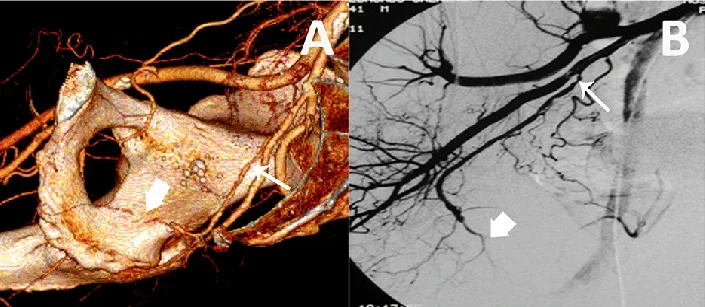
- CT angiography or catheter angiography: These images map the iliac, internal pudendal and penile arteries and show the exact position of the blockage. Selective angiography of the internal iliac artery is the most direct way to confirm it.
How Pudendal Artery Angioplasty and Stenting in Jaipur Is Performed
- Local anaesthesia and access: The skin is numbed and a small puncture is made, usually in the groin or the wrist. General anaesthesia is not normally needed, and mild sedation can be given if you are anxious.
- Angiogram: A catheter is guided to the internal iliac artery, and contrast dye is injected. A vasodilator medicine is often given into the artery, so that a temporary spasm is not mistaken for a blockage. Pictures from different angles show the whole internal pudendal artery.
- Opening the blockage: A fine guidewire crosses the narrow segment, and a balloon is inflated to widen it. A drug-coated balloon or a stent may be used to help the artery stay open.
- Final check and closure: A last angiogram confirms better flow. The catheter is removed, and the puncture site is closed with pressure or a closure device.
Benefits of Angioplasty
- It aims to correct the cause of the problem, which is poor blood supply, and not only the symptom
- No open surgery and no large cut
- Local anaesthesia in most patients, which is helpful for people with diabetes or heart conditions
- Less pain and a lower chance of wound infection than open surgery
- Short hospital stay and a quicker return to routine activity
- Some men respond better to tablets after blood flow improves, although this differs from patient to patient
Work Shedule
Get In Touch In The
Mean Time.
Your questions and queries are important to us. Ask us whatever query you have for your disease. We’ve expert to resolve all your queries.
- Monday – Saturday 09:00 AM – 08:00 PM
- Sunday – Closed
Want to Visit Our Clinic? Please Get In Touchwith us
Make An Appointment
Latest News & Updates of Dr. Nikhil Bansal
Stay updated with the latest news, vascular treatment insights, and updates from Dr. Nikhil Bansal.