


You get through your day without much trouble, but as soon as you sit down or lie in bed, your legs begin to ache. They may feel heavy, throb, or even cramp during the night. If you’ve experienced this, you’re probably wondering Why Do Varicose Veins Hurt more when you’re finally trying to rest.
The reason is simpler than most people think. Your veins have been working all day to push blood back to the heart. When they don’t work properly, pressure builds up over time, making the discomfort more noticeable by evening.
First, Understand What Varicose Veins Are
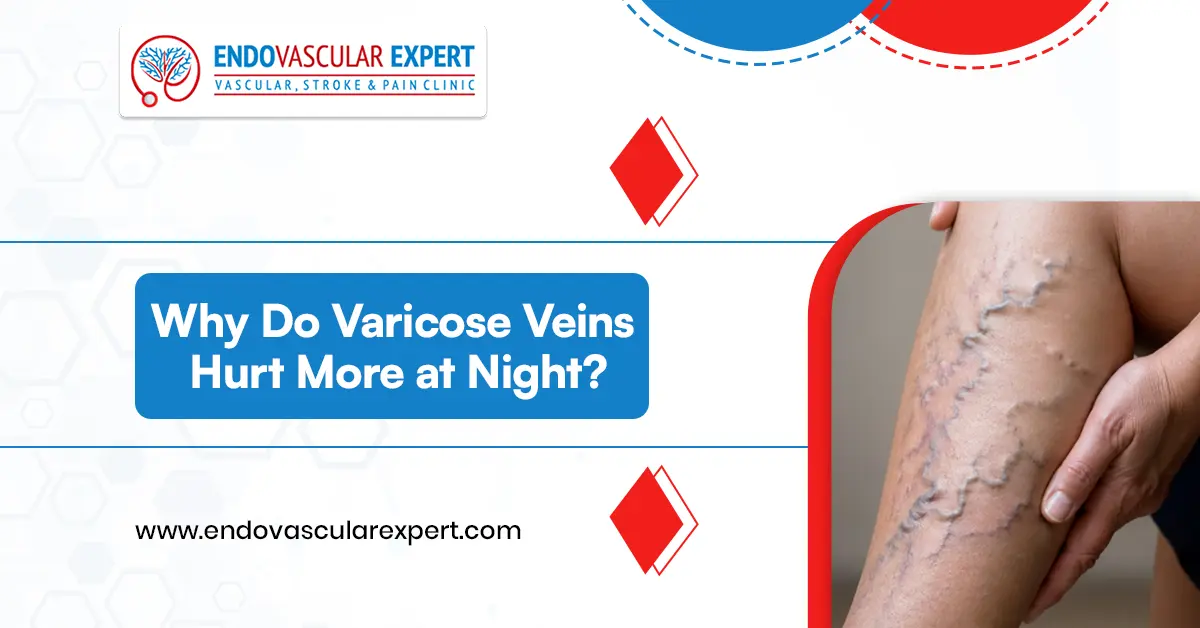
Varicose veins are large, swollen veins that are most common in the legs. They occur when the small valves in the veins don’t work properly. These veins permit a little backflow of blood. Instead of taking blood back to the heart. Gradually, the veins become more visible and elongated. Not all varicose veins develop in the same way.
Some people notice only the veins beneath the skin. Others may suffer aching, heaviness, swelling, even leg cramps, especially after a long day. The symptoms can be different for every person, which is why many people don’t realise they have a vein problem until the discomfort starts affecting their daily life.
Why do Varicose Veins Hurt More at Night?
The pain does not come on suddenly at night. It has a way of accumulating throughout the day. When the valves inside the veins weaken, they can’t push blood back up to the heart as well as they should. Still, some blood builds up pressure in the veins. That pressure gradually builds up as the day wears on, which is why your legs tend to feel worse by nightfall. You might see:
- Pain or aching in the legs
- Tiredness or heaviness
- Swelling of the ankles
- Nighttime leg cramps or restlessness
Your veins have been working hard all day long. They’ve been under pressure for hours by the time nighttime comes. That’s why do varicose veins hurt more at night, because the discomfort is sometimes more pronounced when you finally sit down or lie down to rest.
Why Doesn’t Everyone Feel the Same Pain?
Some people have big, obvious veins and never feel any discomfort, while others ache every evening. That’s because the pain isn’t always matched by the way the veins look on the outside.
Your symptoms can be affected by several factors, including:
- How long you stand or sit during the day
- Your total circulation
- Weight
- Physical activity
- Pregnant
- A family history of varicose veins
Some people also notice that their legs feel heavier in hot weather, as the heat causes the veins to dilate and more blood pools there.
Small Changes That Can Make Evenings More Comfortable
Varicose veins don’t just go away, but there are some basic habits you can adopt to ease the pressure on your legs and make your day-to-day life more comfortable.
You could try:
- A little walk after work instead of plopping down immediately.
- Put your legs up for 15–20 minutes before going to bed.
- Use compression stockings if advised by your doctor.
- Don’t sit or stand for long periods without moving.
- Keeping a healthy weight to lessen the pressure on the veins.
- Drink lots of water and stay physically active.
They won’t get rid of varicose veins, but many find they help minimize swelling and night-time discomfort.
When Should You See a Doctor?
It’s easy to ignore strange leg pain, especially after a hectic day. But pain that continues shouldn’t be accepted as usual.
If you see: Don’t delay getting a medical assessment
- Pain that gets worse and worse
- Sore swelling that doesn’t reduce with rest
- Darkening of skin around the ankle
- Bleeding from varicose veins
- A sore or ulcer that does not heal
- Sudden redness, warmth or significant discomfort in the leg.
The sooner the diagnosis is made, the less likely complications will arise, and treatment can be started before the disease worsens.
Conclusion
Recognizing why varicose veins hurt more at night will help you understand that the pain is often due to pressure building up inside your veins during the day, not because your legs suddenly get worse after sundown. If the pain is occurring more often or beginning to interfere with your everyday routine, it’s wise to seek professional advice with the Best Radiologist in Jaipur Dr. Nikhil Bansal who can help you identify the cause early and guide you towards the most suitable treatment.