


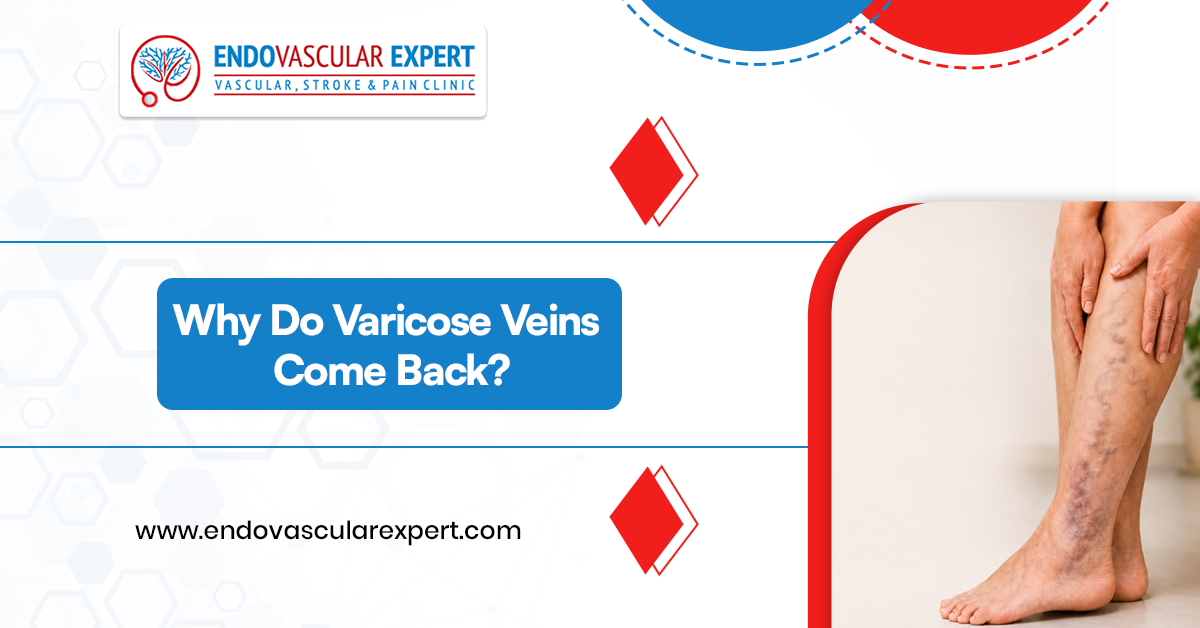
You finally got your varicose veins treated. The swelling settled down, your legs felt lighter, and those bulging veins were gone. Life felt normal again.
Then one day, you notice another vein on your leg.
Naturally, the first question that comes to mind is, “Didn’t I already get this treated?”
If you’ve been wondering Do Varicose Veins Come Back?, you’re certainly not alone. It’s one of the most common questions people ask after treatment. The good news is that in most cases, the treated vein doesn’t come back. What usually happens is that a different vein becomes weak over time. Since varicose veins are part of a long-term vein condition, new veins can sometimes develop years later.
What Are Varicose Veins?
Varicose veins are enlarged, twisted veins that usually develop in the legs. They occur when blood is not moving well through the veins. Blood collects, and the veins get big. They can be visible and make your legs feel heavy, achy, or uncomfortable. The common symptoms include:
- Heavy or aching legs
- Ankle swelling
- Night cramps
- Itching around the affected veins
They’re more common in women – especially during pregnancy and menopause – but men can develop them as well.
Do Varicose Veins Come Back After Treatment?
It’s one of the first questions patients ask after their treatment. Sure, but there’s a catch.
Modern treatments like laser treatment, radiofrequency ablation (RFA), and sclerotherapy can permanently treat the affected vein. When it’s closed, it won’t get varicose again.
Do Varicose Veins come back after Treatment? They can, but it’s most often because a new vein develops a problem, not the one that has been treated has failed. That’s one reason why some people develop new varicose veins months or even years after treatment.
Why Do Varicose Veins Come Back?
If the treated vein stays closed, then why do new varicose veins form? The reason is simple: varicose veins are a chronic vein condition. During treatment, the unhealthy vein is removed, but other veins may weaken later in life. There are a few things that might increase the likelihood of this:
- Family history of varicose veins: If in your family someone has history of varicoise veins then there can be more chance then there is high chance you can have also that is why right taking t=guidance at athe right time can amke a big difference.
- Hormonal changes and pregnancy: Many women develop varicose veins during pregnancy. Your leg veins have to work harder as your baby grows. Pregnancy – Hormonal changes that occur during pregnancy can weaken the veins and cause new varicose veins to develop.
- Age: As we age, our veins do not function as well as they used to. It can cause new varicose veins.
- Everyday Habits: Some daily habits can also increase the chances of getting new varicose veins, such as:
- Long standing
- Being in one place for too long
- Overweight
- Sedentary lifestyle
Keeping physically active and living a normal life can help you keep your veins healthy and lower your chances of developing new varicose veins.
Can You Prevent Varicose Veins From Returning?
No treatment can guarantee you will never develop another varicose vein, but you can certainly reduce the chances.
Here are some simple habits that help.
- Walk 20-30 minutes a day.
- Keep a healthy weight.
- Don’t sit or stand in the same position for long periods of time.
- Raise your legs whenever you can.
- Use compression stockings if your doctor recommends them.
- Don’t miss your follow-up visits.
These tiny changes are good for circulation and help keep your veins in better condition.
When Should You See a Vein Specialist?
Don’t wait until the veins are big or painful. Early treatment is typically faster and more effective. See your doctor if you have:
- New protruding veins
- Heaviness or aching in the legs
- Swelling of the feet
- Night cramping
- Changes in skin colour
- Redness, burning or itching near the veins
If you are seeking expert treatment, then a visit to a trusted Varicose Veins Clinic in Jaipur will help you find the cause of your symptoms and suggest the best possible treatment before the disease progresses.
Conclusion
So, Do Varicose Veins come back? They can, but don’t blame your treatment! Most of the time it is a new vein that decides to join the party, not the old one making a comeback. Keep moving, look after your legs and don’t ignore new symptoms. A quick check-up today can save you from bigger vein problems tomorrow.