


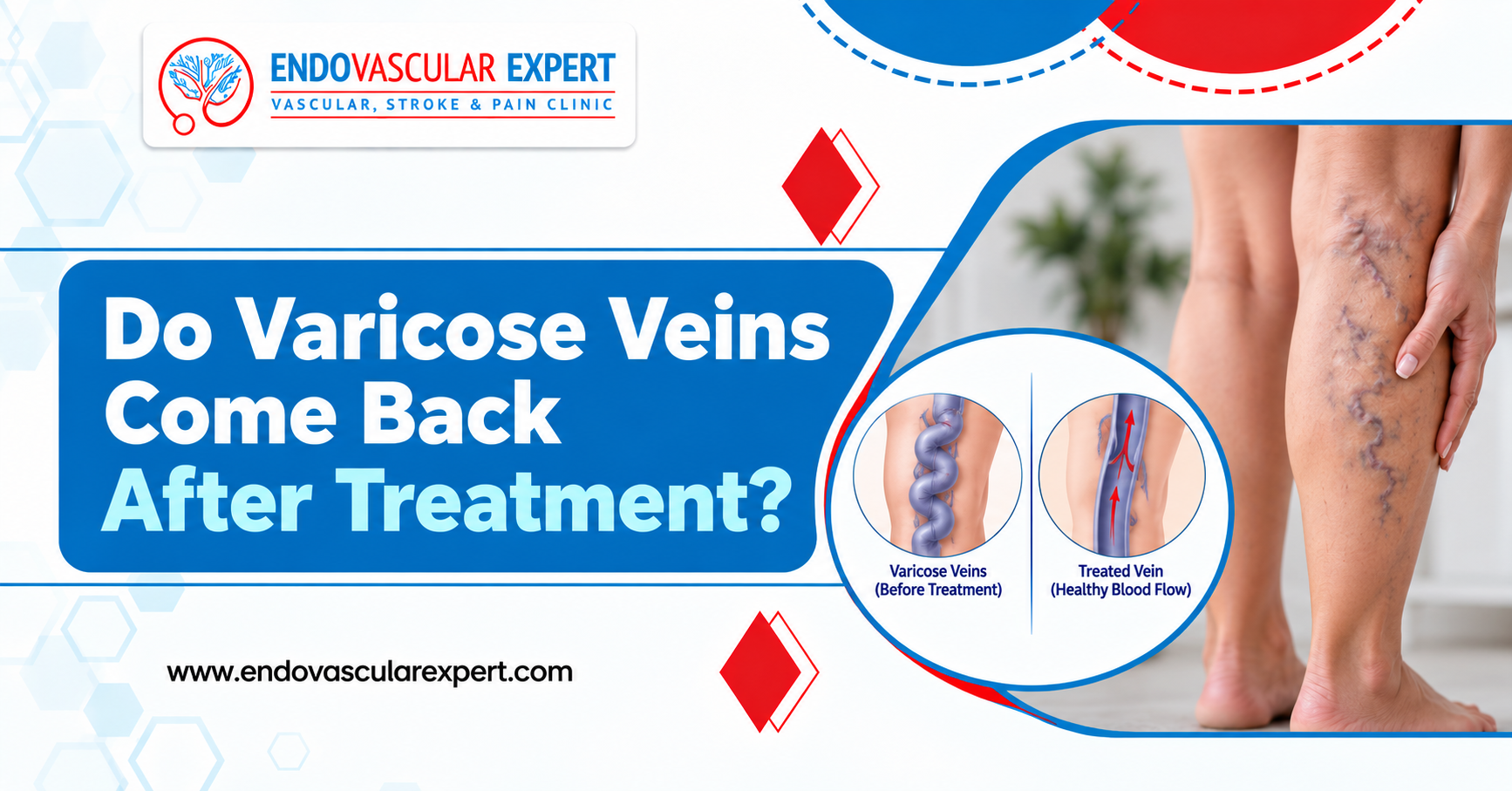
This is the question every honest vein doctor should answer clearly, and many avoid: can varicose veins come back after treatment? The truthful answer is yes, they can — and understanding why is the best way to keep your result for the long term. No treatment freezes your veins in time forever, but modern methods have high durability, and most recurrences are preventable or easily managed.
Three Different Things People Call “Coming Back”
It helps to separate them, because they are not the same:
- The treated vein reopens. Uncommon with modern methods — published one-year closure rates are roughly 92–98% for laser and RFA and 94–97% for glue. So reopening of a properly treated vein is the minority.
- A vein that was diseased but not treated. This is the big one. If the ultrasound map missed a refluxing vein, symptoms persist and look like “failure”. It is not the treatment failing — it is an incomplete diagnosis.
- Genuinely new veins over time. The underlying tendency to venous disease doesn’t disappear. Over years, new veins can develop, particularly with the risk factors below. This is true recurrence and is usually treatable with a small top-up procedure.
Why Complete Mapping is the Single Biggest Factor
Most “my varicose veins came back” stories trace to point 2. The great saphenous, small saphenous, anterior accessory and perforator veins can each contribute, and treating only the obvious one leaves the others pumping. A thorough Colour Doppler Vein Mapping of the whole venous system — done by the doctor who will treat you — is what prevents this. It is the least glamorous and most important part of the whole process.
What Raises Your Risk of New Veins Later
- Standing occupations (teachers, traffic police, retail, surgeons, cooks).
- Higher body weight.
- Multiple pregnancies.
- Strong family history of varicose veins.
- Not treating the deeper source and only removing surface bulges cosmetically.
How to Protect Your Result
You can meaningfully lower recurrence: keep a healthy weight, walk daily to work the calf-muscle pump, avoid very long unbroken standing, wear compression stockings if you have a standing job, and elevate the legs when you can. And have an annual review — a two-minute Doppler check catches a new refluxing vein while it is tiny and easily treated, long before it becomes a bulging cluster.
Had treatment elsewhere and the veins are back? A complete re-mapping usually finds the untreated source. Dr. Nikhil Bansal (MD, PGDHHM, FVIR, FIPM), Interventional Radiologist, does the Doppler personally and treats what was missed.
Frequently Asked Questions
What are the chances varicose veins come back after laser treatment?
Reopening of a properly treated vein is uncommon — published one-year closure rates are around 92–98% for laser. Most recurrence is either an untreated vein that was missed, or genuinely new veins developing over years.
Why did my varicose veins return after treatment somewhere else?
The commonest reason is an incomplete initial ultrasound map that left a refluxing vein untreated. A full re-mapping usually identifies and treats the source.
Can I prevent varicose veins from coming back?
You can lower the risk: maintain a healthy weight, walk daily, avoid prolonged standing, use compression stockings if your job requires standing, and have an annual Doppler check to catch new veins early.