


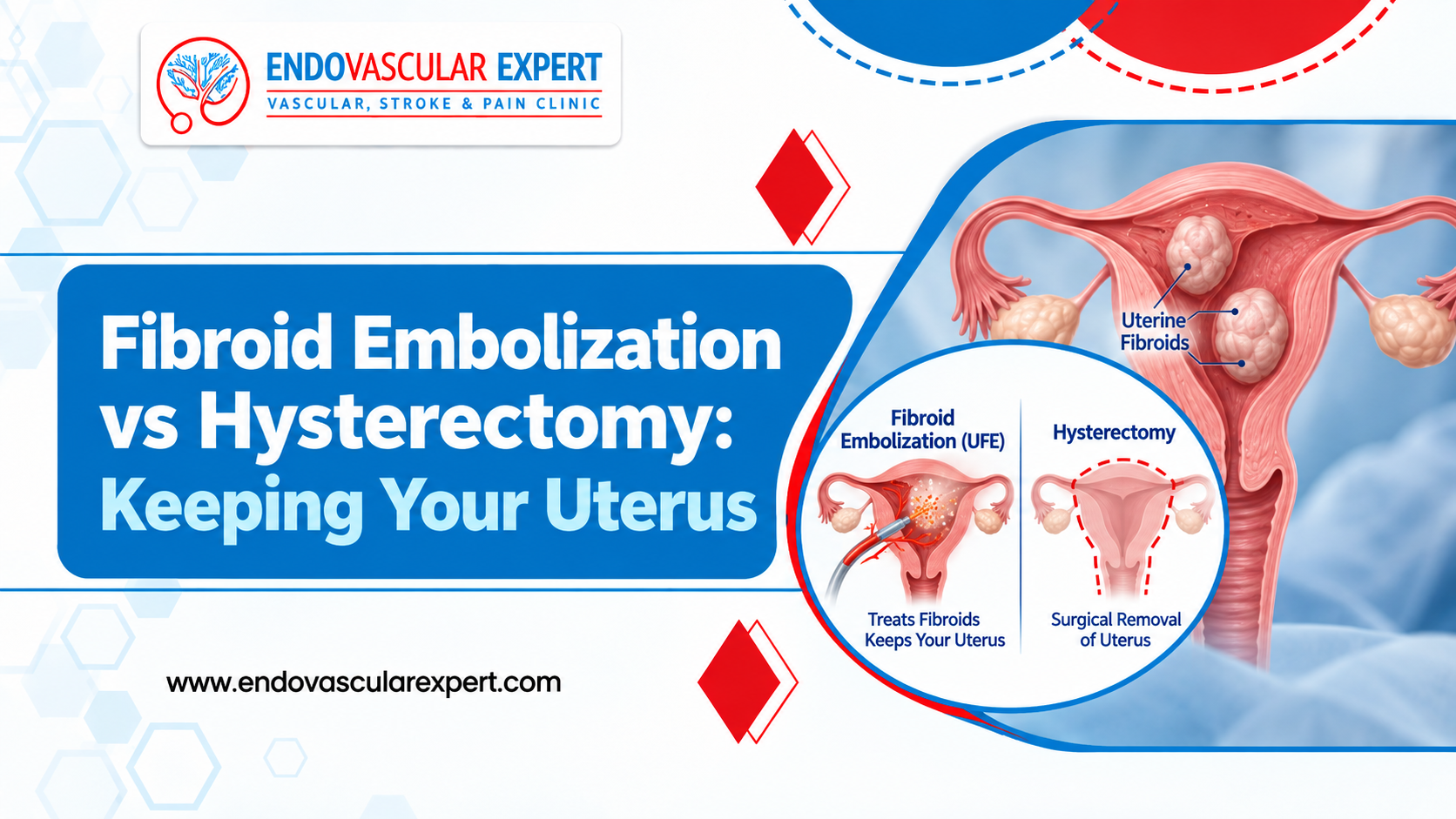
Many women are told that the only fix for troublesome fibroids is a hysterectomy — removing the uterus. It is a valid option, but it is not the only one. Uterine Fibroid Embolization (UFE) treats fibroids through a pinhole in the wrist or groin, keeps the uterus intact, and lets most women go home the next day. If you have been given a single option, this article is the second opinion.
What is UFE?
Fibroids depend on blood flowing through the uterine arteries. In UFE, an interventional radiologist threads a fine catheter to those arteries and releases tiny particles that block the fibroids’ blood supply. Starved of blood, the fibroids shrink and soften over the following weeks and months, and the heavy bleeding and pressure symptoms ease. The healthy uterus recovers its normal blood supply through other vessels.
Head to Head
| Factor | UFE (Embolization) | Hysterectomy |
|---|---|---|
| Uterus | Preserved | Removed |
| Incision | Pinhole (needle puncture) | Abdominal or laparoscopic surgery |
| Anaesthesia | Local + sedation | General/spinal |
| Hospital stay | Usually 1 day | Typically 2–4 days |
| Return to routine | ~1–2 weeks | ~4–6 weeks |
| Symptom relief | ~85–90% in published studies | Definitive (fibroids removed with uterus) |
| Fibroids can recur | Possible over years | No (uterus removed) |
Who is UFE a Good Fit For?
UFE suits women who have heavy periods, pressure, bloating or frequent urination from fibroids and who want to keep their uterus — whether for personal, cultural or fertility-related reasons, or simply to avoid major surgery. It is especially valuable for women who are not surgical candidates due to other health conditions.
Who Might be Better With Surgery?
Very large fibroid burden, suspicion of malignancy, certain pedunculated (stalked) fibroids, or active pelvic infection may make surgery or another approach more appropriate. Women actively planning pregnancy need an individualised discussion, as the evidence there is more nuanced. The point is not that UFE is always better — it is that you deserve to hear both options and choose.
Recovery After UFE
The first few days can bring cramping (like strong period pain) and low-grade fever as the fibroids are treated — this is expected “post-embolization syndrome” and is managed with medication. Most women return to light routine within a week or two. Symptom improvement builds over the following three to six months as the fibroids shrink.
Been told hysterectomy is your only option? Get a second opinion. Dr. Nikhil Bansal (MD, PGDHHM, FVIR, FIPM), Interventional Radiologist in Jaipur, offers UFE in Jaipur and will review your ultrasound/MRI to tell you honestly whether you are a candidate.
Frequently Asked Questions
Does UFE keep the uterus?
Yes. That is its main advantage over hysterectomy — the uterus is preserved and only the fibroids’ blood supply is blocked.
How Effective is Fibroid Embolization?
Published studies report symptom improvement in roughly 85–90% of women, with significant reduction in heavy bleeding and pressure symptoms.
Is UFE Painful?
The procedure is done under local anaesthesia with sedation. The main discomfort is cramping in the first few days afterwards, which is controlled with medication.
Can Fibroids Come Back After UFE?
New fibroids can develop over the years since the uterus remains, but treated fibroids that have shrunk generally do not regrow. Regular follow-up is advised.