


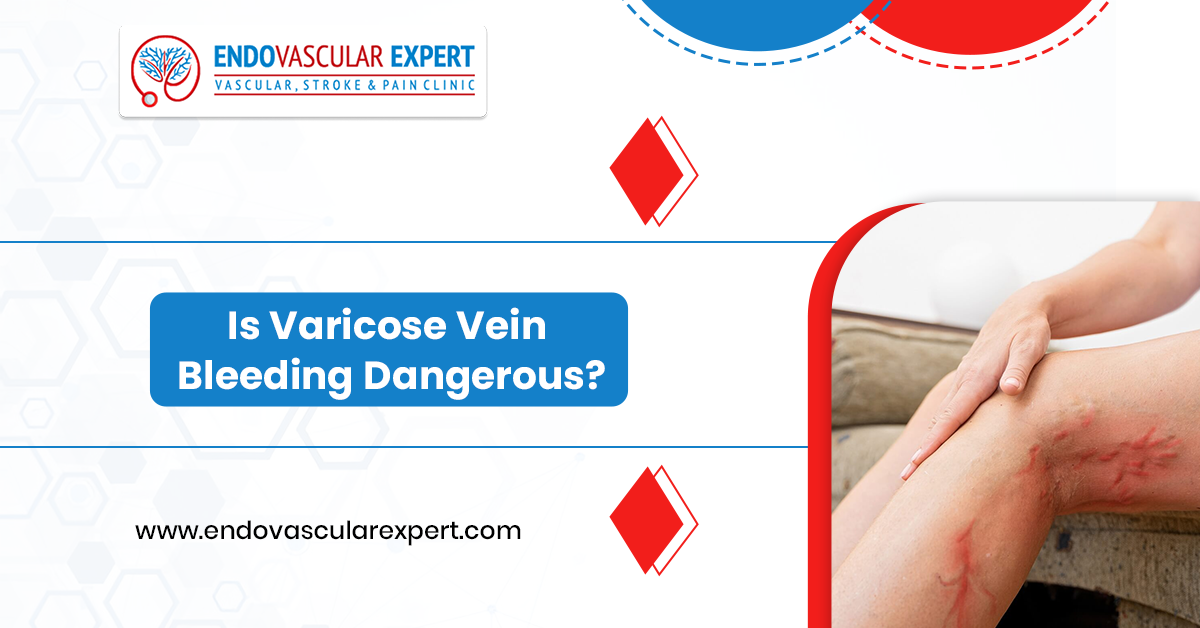
Most people don’t seek medical advice for varicose veins because of bleeding. They usually come because their legs feel heavier than they used to. By evening, there may be mild swelling around the ankles. Some notice itching around a prominent vein. Others become used to seeing enlarged blue veins and assume they are part of getting older.
Then something unexpected happens
A small scratch while changing clothes. A shaving cut. A light knock against a table while walking through the house. Nothing that would normally cause concern. Yet within moments, there is more blood than anyone expected.
The surprise often comes from the mismatch between the injury and the bleeding. The cut looks tiny, but the blood flow suggests otherwise. It is usually at this point that people begin asking a question they may never have considered before: Is Varicose Vein Bleeding Dangerous?
The answer is that it can be. Not every episode becomes an emergency, but bleeding from a varicose vein should never be dismissed as a minor inconvenience. In many cases, it is the body’s way of signalling that the vein has become fragile and may need professional attention.
Why Does It Bleed So Easily?
Blood is supposed to keep moving upwards through the veins. When the tiny valves inside those veins stop working properly, some of that blood begins to collect where it shouldn’t. The pressure slowly builds. Months pass. Sometimes years. The vein stretches. The skin above it gradually becomes thinner.
Eventually, what would have been a harmless scratch elsewhere on the leg may be enough to break the surface and start bleeding. Patients are often surprised when this happens because the trigger feels insignificant.
Common examples include:
- Scratching itchy skin
- A minor shaving nick
- Rubbing dry skin with a towel
- Small bumps during daily activities
- Friction around a prominent vein
Sometimes there is no clear trigger at all. People notice blood and cannot explain what happened.
The Question Most People Ask
Once the bleeding stops, the same question usually follows: Can the Varicose Vein Bleeding Dangerous?
In some situations, the answer is no. The bleeding settles quickly, the area heals, and there are no lasting problems. The reason doctors still take it seriously is that the bleeding is often telling a bigger story.
A vein rarely becomes fragile overnight
Many people who experience bleeding have already noticed other changes for months beforehand. Their legs feel heavy in the evening. Shoes seem tighter around the ankles. The skin becomes itchy. Standing for long periods feels more uncomfortable than it used to.
The bleeding may simply be the first symptom that cannot be ignored.
What Should You Do If It Happens?
The sight of blood naturally creates panic.
The first priority is to stay calm, then follow these guidelines:
- Sit down or lie down if possible.
- Raising the affected leg can help reduce pressure within the vein.
- Apply firm pressure over the area using a clean cloth or dressing and keep that pressure in place.
- Avoid repeatedly checking the wound every few seconds.
- Avoid standing or walking unnecessarily
Even if everything settles quickly, arranging a medical assessment is usually a sensible next step.
Looking Beyond The Immediate Problem
A single episode does not always mean a serious complication has developed. Repeated episodes are different.
When bleeding keeps returning from the same area, the underlying vein disease often needs attention. Other warning signs may appear alongside it:
- Persistent swelling around the ankles
- Skin colour changes near the lower leg
- Aching after standing
- Visible enlargement of existing veins
- Slow healing of small wounds
Preventing Future Problems
The encouraging news is that many complications associated with varicose veins can be reduced with early care.
Simple measures help:
- Keep yourself physically active by walking routinely.
- Avoid prolonged standing without any movement.
- Keep your weight at a healthy level.
- Avoid cuts and injuries to the skin.
If you continue to have symptoms, do not wait until the next time you bleed to get help. Early assessment can often be good at picking out problems before they get harder to deal with.
If you are suffering from chronic vein-related symptoms, early Varicose Veins Treatment in Jaipur with Dr. Nikhil Bansal can help treat the underlying cause and reduce the chances of further complications.
Final Thoughts
So, Is Varicose Vein Bleeding Dangerous? Sometimes it is. More importantly, it should never be dismissed as meaningless. A small amount of bleeding may seem like an isolated incident, but it can also be a sign that the veins have been under pressure for a long time. Paying attention to that warning sign early often makes treatment simpler and helps prevent more troublesome complications in the future.