


A man in his late 50s walks into a vascular clinic. His legs ache every time he walks more than a few hundred metres. He has been told he has a blockage in his leg arteries. His doctor recommends angioplasty. And the first thing he asks is, “Will this fix it permanently?”
It is a completely fair question. And the honest answer is a bit more layered than a simple yes or no.
What Angioplasty Actually Does?
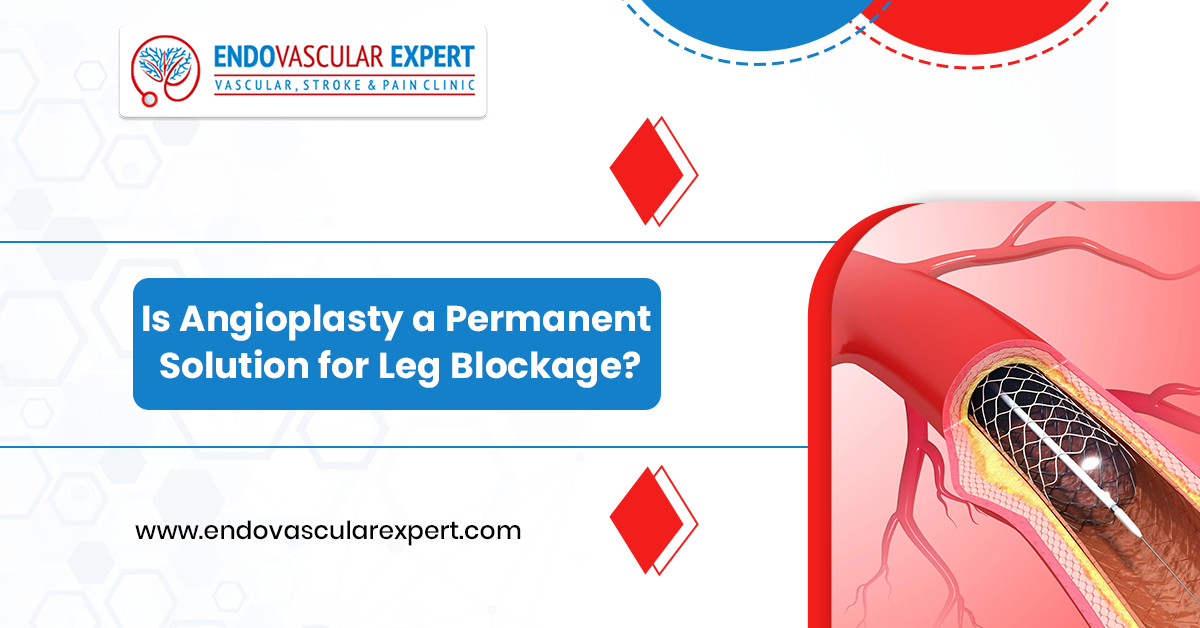
In angioplasty, a catheter having a balloon at its end is used to expand the narrowed arteries to allow normal blood flow through it. Angioplasty may be done together with stenting wherein a small metallic mesh tube is used inside the artery to hold it open. This helps prevent the recurrence of the blockage.
So the procedure opens the blockage. Blood flows again. The leg pain eases. For a lot of patients, the relief is significant and fairly immediate. Angioplasty may help you walk farther without leg pain than you could before the procedure.
Is It Really a Permanent Solution for Leg Blockage?
Peripheral angioplasty and stenting has a success rate of 80 to 90 percent. However, some patients may need repeat treatment if symptoms return in the future.
That is the reality of it. The procedure works well. Stents placed during angioplasty are permanent structures, designed to stay inside the artery. Stents are designed to adapt to natural body movements, enhancing mobility and reducing symptoms. But the underlying condition, Peripheral Artery Disease, is driven by atherosclerosis. Plaque builds up because of cholesterol, diabetes, high blood pressure, smoking, a sedentary lifestyle. If those factors are not managed, the arteries can narrow again over time, even around a stent.
So angioplasty is a highly effective treatment for leg blockage. Whether it becomes a long-term or permanent solution depends largely on what happens after the procedure.
What Determines Long-Term Success
How well angioplasty works depends on the size of the blood vessel, the length of blood vessel affected, and whether the blood vessel is completely blocked. Larger arteries with short narrowed areas tend to respond better than smaller or fully blocked vessels.
This means two patients can have angioplasty for leg blockage and have very different long-term outcomes based on the location and severity of their disease, and how well they manage their risk factors afterward.
When Angioplasty Alone Is Not Enough
Angioplasty and related procedures do not work for everyone. That is when bypass surgery may be needed. For patients with very long blockages or multiple affected segments, more extensive vascular surgical intervention may give better results than angioplasty alone.
The point is not that angioplasty is insufficient. It is genuinely one of the best minimally invasive options available today. The point is that thinking of any single procedure as a permanent solution for leg blockage without committing to lifestyle changes is where patients go wrong.
If you have been experiencing leg pain, cramping while walking, non-healing wounds on the feet, or cold legs, do not delay evaluation. Reach out to a Vascular Doctor in Jaipur and get a proper assessment before the blockage progresses further.
About the Doctor
Dr. Nikhil Bansal is an Interventional Radiologist and Angioradiologist with advanced training from institutions in India, Canada, and Germany. Currently an Assistant Professor at Mahatma Gandhi Hospital, Jaipur. He is a true expert in angiography and minimally invasive vascular procedures. He helps diagnose blood vessel blockages perfectly and guides patients towards effective treatment options, often skipping the need for major surgery.