


Most people get leg pain and immediately think of muscle cramps. Gym the day before. Too much walking. Standing for too long at work. And ninety percent of the time, that’s exactly what it is.
But sometimes it isn’t.
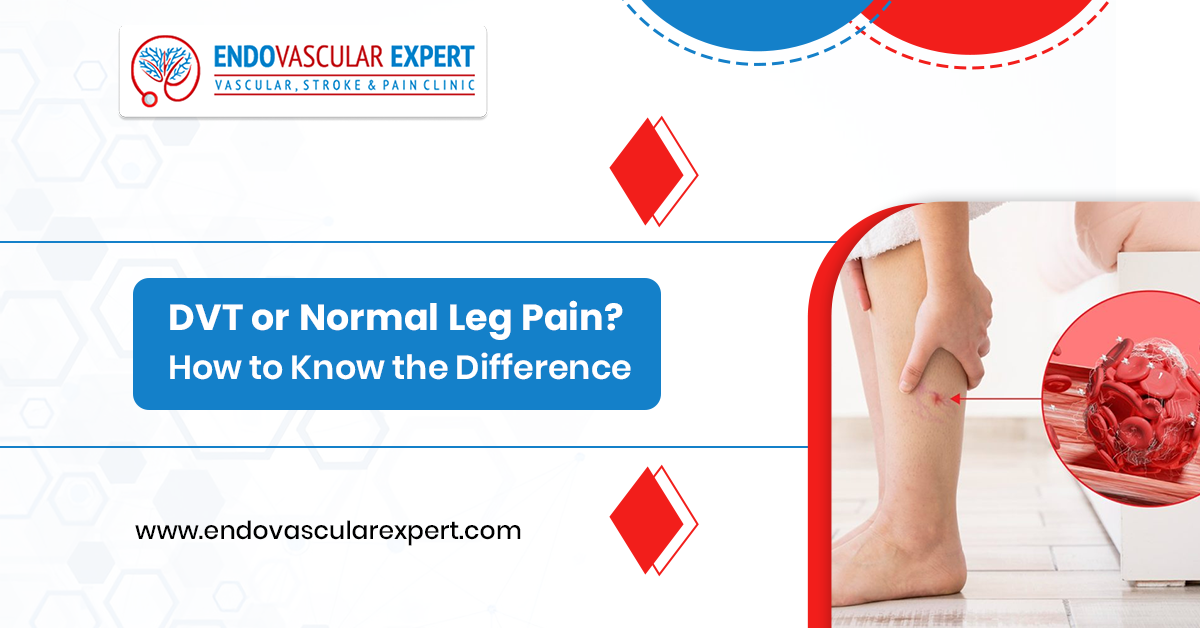
Sometimes that dull ache in the calf is a blood clot sitting inside a deep vein, quietly growing, with the potential to break loose and travel to the lungs. That’s Deep Vein Thrombosis. And the terrifying part is how closely it can feel like something ordinary at first.
So how do you actually tell the difference between DVT or normal leg pain?
What DVT Actually Feels Like
Many patients describe DVT pain as feeling like a pulled muscle that doesn’t improve with rest or time. That last part is the key. Normal muscle soreness gets better when you sit down, put your legs up, stretch it out. DVT pain builds up gradually over hours or days and crucially does not go away with stretching, walking, or massage. In fact, massaging a DVT can be dangerous as it might dislodge the clot.
That distinction alone is worth remembering.
The Signs That Separate DVT from Normal Leg Pain
It Usually Affects Only One Leg
DVT does not usually affect both legs at the same time. The swelling may occur only around the calf muscle, but it can affect the entire leg. If one leg is noticeably swollen and the other is completely fine, that asymmetry is a red flag worth taking seriously.
Warmth and Redness Over the Area
Typical DVT symptoms include leg pain, swelling, tenderness, and warmth, because the clot blocks normal circulation. In some cases, the skin may appear red or discoloured, or the leg may feel heavy. A regular cramp doesn’t make the skin warm to the touch. DVT often does.
One Shoe Feels Tighter Than the Other
You might notice that your sock leaves a deeper indentation on one leg than the other, or that one shoe feels tighter. Fluid is backing up because the clot is blocking blood flow back toward the heart. These are small signs, but they matter.
When It Becomes a Medical Emergency
The most dangerous complication occurs when part of the clot breaks off and travels to the lungs, causing a pulmonary embolism. Symptoms include sudden shortness of breath, chest pain while breathing in or coughing, rapid breathing, rapid pulse, feeling faint, and coughing up blood.
Get immediate attention if you have pain, swelling, and tenderness in your leg and you also develop breathlessness and chest pain, as you may have a DVT that has developed into a pulmonary embolism. This is not something to wait out.
Who Is at Higher Risk
DVT most commonly develops in people who are inactive for long periods, such as after surgery, during a hospital stay, or on long flights. Other risk factors include obesity, pregnancy, smoking, older age, and certain genetic clotting disorders.
Telling DVT or normal leg pain apart on your own is genuinely difficult. A vein ultrasound takes minutes and gives a definitive answer. Consulting a trusted Deep Vein Thrombosis Surgeon in Jaipur early could prevent a situation that becomes life-threatening fast.
About the Doctor
Dr. Nikhil Bansal completed an Elective Rotation at McGill University, Montreal, a Fellowship in Pain Management accredited with Aesculap Academy in Germany. He also holds an Observership in Image-Guided Therapy from SickKids Hospital, Toronto, Canada. Currently serving as Assistant Professor in Interventional Radiology at Mahatma Gandhi Hospital, Jaipur, he has pioneered several minimally invasive vascular procedures in Rajasthan, including advanced DVT treatment through endovascular techniques.